
← Back to blog

Expert Commercial HVAC & Fire Suppression Services in Detroit, MI

Expert Commercial HVAC & Fire Suppression Services in Detroit

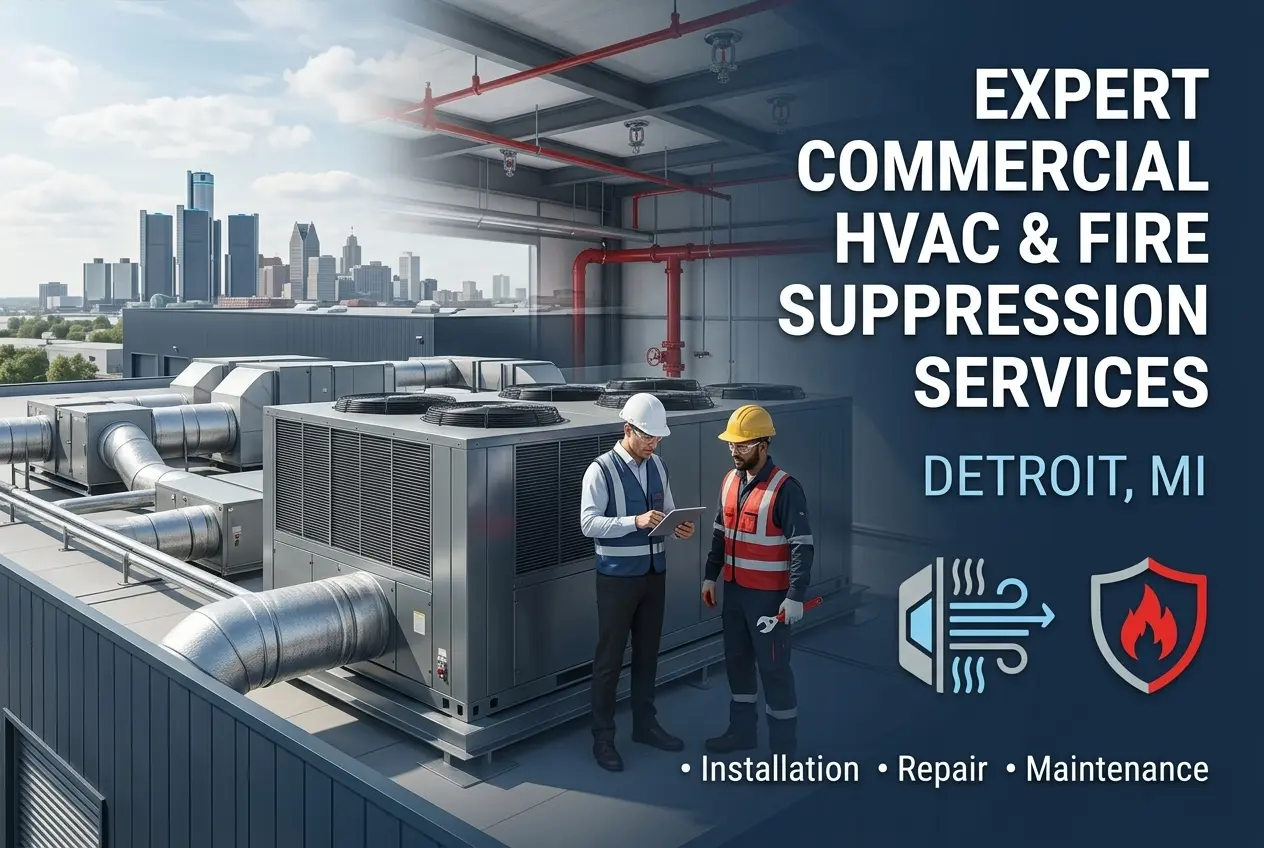
Expert CommercialIf you own or manage a commercial property in Detroit, Michigan, reliable HVAC systems and fire suppression solutions are not optional — they are essential. From the manufacturing plants of Midtown to the office towers of Downtown Detroit and the warehouses lining I-94, every building depends on climate control and fire safety to protect people, assets, and operations. Commercial HVAC and fire suppression services in Detroit, MI cover everything from installing high-capacity rooftop units and chiller systems to designing, installing, and maintaining wet pipe sprinkler systems and clean agent suppression for server rooms and data centers. Choosing the right contractor means faster response times, code-compliant installations, and lower total cost of ownership.
This guide answers the most important questions Detroit business owners, facility managers, and property developers ask — giving you everything you need to make a confident, informed decision.

What Are Commercial HVAC & Fire Suppression Services?

Commercial HVAC (Heating, Ventilation, and Air Conditioning) services encompass the design, installation, maintenance, and repair of climate control systems in non-residential buildings. Fire suppression services include the design, installation, inspection, and testing of systems — such as sprinklers, gaseous agents, and foam systems — that automatically control or extinguish fires. Together, they form the backbone of building safety and occupant comfort.
Unlike residential systems, commercial HVAC units handle far greater loads, operate continuously, and must meet stricter regulatory standards set by ASHRAE, NFPA, and local Detroit and Michigan building codes. Fire suppression systems are governed by NFPA 13, NFPA 72, and the Michigan Mechanical Code — all enforced by local fire marshals and the City of Detroit Buildings, Safety Engineering, and Environmental Department (BSEED).

Why Detroit Businesses Need Specialized HVAC & Fire Safety Contractors

Detroit's climate is demanding. With summer humidity reaching 80%+ and winter temperatures dropping well below freezing, commercial HVAC systems in Detroit face intense seasonal stress. That means a generic installation or a contractor unfamiliar with Michigan's climate patterns will cost you more in energy waste and emergency repairs over time.
Beyond climate, Detroit's commercial real estate landscape includes a high concentration of aging industrial buildings, many of which require custom HVAC retrofits and fire suppression upgrades to meet current codes. The Detroit area is also home to sectors with specialized needs:
Key Safety Measures
• Automotive manufacturing plants requiring precision temperature and humidity control
• Hospitals and medical facilities with infection-control HVAC requirements
• Restaurants and commercial kitchens requiring Ansul-type wet chemical hood suppression
• Retail and office properties in Midtown, Corktown, and the New Center area undergoing renovation

Types of Commercial HVAC Systems Installed in Detroit

Detroit commercial properties use a wide range of HVAC systems depending on building size, energy requirements, and property type.
Rooftop Units (RTUs)
The most common commercial HVAC solution in Detroit's retail and mid-size commercial buildings. RTUs provide packaged heating and cooling and are ideal for flat-roof structures along major corridors such as Gratiot Avenue, Michigan Avenue, and Grand River Avenue.
Chiller & Cooling Tower Systems
Large office towers, hospitals, and university facilities near Wayne State University and the Detroit Medical Center commonly rely on central chiller plants for efficient large-scale cooling. Proper sizing and routine maintenance are essential for performance and reliability.
Variable Refrigerant Flow (VRF) Systems
VRF systems are increasingly popular in Detroit's mixed-use developments and historic building renovations where traditional ductwork is difficult to install. They provide zone-by-zone temperature control and excellent energy efficiency.
Split Systems & Heat Pumps
Smaller office spaces and commercial suites in Midtown and New Center frequently use split systems and heat pumps. Modern commercial heat pumps can operate efficiently during Michigan winters when paired with supplemental heating systems.

Types of Fire Suppression Systems for Detroit Commercial Properties

System TypeBest ForKey Standard
Wet Pipe SprinklerOffices, retail, warehousesNFPA 13
Dry Pipe SprinklerUnheated warehouses, parking garagesNFPA 13
FM-200 / Novec 1230Server rooms, data centers, archivesNFPA 2001
Ansul Wet ChemicalCommercial kitchens, restaurantsNFPA 17A
Foam SuppressionAuto plants, fuel storage, hangarsNFPA 11
CO2 SystemsIndustrial machinery, paint boothsNFPA 12

What Affects Installation Costs in Detroit?

Answer Engine Snippet

Commercial gas piping installation costs in Detroit depend on building size, gas load requirements, piping material, permit fees, labor complexity, and code compliance upgrades. Older Detroit commercial properties often require additional retrofitting, pressure testing, or ventilation modifications that can increase total project costs.

Here are the primary cost factors that influence commercial gas piping installation pricing in Detroit:

  1. Building size and layout directly affect piping length, labor time, and installation complexity.
  2. The type of commercial gas system being installed impacts material, pressure regulation, and equipment requirements.
  3. Material selection such as black steel, CSST, or specialty piping changes both labor and long-term maintenance costs.
  4. Detroit permit fees, inspections, and compliance with Michigan codes add to total project expenses.
  5. Older commercial buildings may require structural upgrades, ventilation improvements, or replacement of outdated infrastructure.
  6. Accessibility of the installation area — including ceilings, utility corridors, and mechanical rooms — can significantly affect labor costs and project timelines.

Cost Overview: Commercial HVAC & Fire Suppression in Detroit, MI

Costs vary widely based on building size, system complexity, and current property conditions. The table below provides estimated pricing ranges commonly seen for Detroit-area commercial projects.

ServiceTypical Range (Detroit Area)Notes
RTU Installation (5–25 ton)$8,000 – $35,000Includes labor & crane service
Chiller System Install$50,000 – $300,000+Pricing varies by tonnage
VRF System (per zone)$3,000 – $6,000Multi-zone discounts available
Wet Pipe Sprinkler (new build)$2 – $4 per sq ftFull system design & installation
FM-200 Clean Agent System$15,000 – $50,000Based on protected volume
Ansul Kitchen Hood System$3,000 – $8,000Includes suppression agent
Annual HVAC PM Contract$2,000 – $10,000/yrBased on number of units
Annual Fire System Inspection$300 – $1,500/yrNFPA 25 compliance
Pro Tip: Always obtain at least three competitive bids. Detroit's large contractor market across Wayne, Oakland, and Macomb counties keeps pricing competitive, but lower bids may exclude permit fees, post-installation service, or long-term compliance requirements.

Mini Case Study: Detroit Warehouse Retrofit

Real-World Example
A 120,000 sq ft distribution warehouse near Detroit's Jefferson Chalmers neighborhood underwent a full HVAC and fire suppression retrofit in 2024. The existing single-zone rooftop system was replaced with four high-efficiency RTUs (Carrier 48XP series, 25-ton each) with BACnet-compatible controls for remote monitoring. Simultaneously, the aging dry-pipe sprinkler system — original to a 1970s build — was replaced with a modern ESFR (Early Suppression Fast Response) wet-pipe system designed to NFPA 13 standards, satisfying the new tenant's insurance carrier requirements. Total project cost: approximately $310,000. Projected annual energy savings from the new HVAC controls: $28,000. ROI timeline: under 5 years.

Detroit-Specific Considerations

Detroit's commercial building environment presents several unique challenges and requirements that property owners and contractors should understand before starting HVAC or fire suppression projects.

BSEED Permitting

The City of Detroit Buildings, Safety Engineering, and Environmental Department (BSEED) requires permits for nearly all commercial HVAC and fire suppression installations. Permit review timelines commonly range from 2 to 6 weeks depending on project size and complexity.

Historic Building Stock

Detroit contains a large concentration of pre-1950 commercial structures. Projects in areas such as Corktown, Eastern Market, and Woodbridge often require contractors experienced with asbestos coordination, historic preservation requirements, and masonry penetration work.

DTE Energy Incentives

DTE Energy provides commercial rebates for qualifying high-efficiency HVAC upgrades through its Commercial Energy Efficiency Program. Incentives may offset approximately 10–30% of equipment and upgrade costs.

Detroit Fire Marshal Compliance

Commercial fire suppression systems must receive approval from the Detroit Fire Marshal's office before becoming fully operational. Contractors familiar with Detroit's inspection process can help reduce delays and avoid costly re-inspections.

Regional Service Areas

Most major Detroit commercial HVAC and fire suppression contractors also serve surrounding communities including Dearborn, Sterling Heights, Warren, Livonia, Auburn Hills, and Pontiac.

FAQ Section

1. What certifications should a commercial HVAC contractor in Detroit have?

A qualified commercial HVAC contractor in Detroit should hold a Michigan Mechanical Contractor License (issued by LARA), EPA Section 608 certification for refrigerant handling, and ideally NATE (North American Technician Excellence) certification for technicians. For larger projects, look for ASHRAE-certified professionals who can perform energy modeling and load calculations.

2. How often should commercial fire suppression systems be inspected in Michigan?

Under NFPA 25 and Michigan state law, wet-pipe sprinkler systems must receive a quarterly visual inspection, an annual internal inspection, and a full five-year obstruction investigation. Alarm and detection systems require annual testing per NFPA 72. Kitchen hood suppression systems (Ansul) must be inspected every six months. Failure to maintain inspection records can result in insurance coverage denial and code violations.

3. Can the same contractor handle both HVAC and fire suppression in Detroit?

Yes — and in many cases, hiring a single integrated contractor for both HVAC and fire suppression services is advantageous. It simplifies project coordination, reduces liability overlap, and ensures HVAC and fire suppression systems are designed to work together (for example, HVAC smoke dampers must be integrated with the fire alarm system). Verify that the contractor holds separate licenses for both mechanical and fire protection work under Michigan LARA regulations.

4.What is the difference between a fire alarm system and a fire suppression system?

A fire alarm system detects smoke, heat, or carbon monoxide and alerts occupants and the fire department — but does not extinguish the fire. A fire suppression system actively releases a suppression agent (water, gas, foam, or chemical) to control or extinguish a fire automatically. Most commercial buildings in Detroit require both systems, integrated so that the suppression system triggers upon alarm activation. This integration is governed by NFPA 72 and NFPA 13.

5. How long does a commercial HVAC installation take in Detroit?

Timeline depends on system type and building complexity. A single RTU replacement typically takes 1–3 days including crane setup and commissioning. A full chiller plant replacement or VRF multi-zone system can take 4–12 weeks, especially when Detroit BSEED mechanical permits are required. Factor in 2–6 weeks for permit approval before any work begins. A good contractor will manage the permit process on your behalf and provide a detailed project schedule upfront.

6. Are there energy efficiency incentives for commercial HVAC upgrades in Detroit?

Yes. DTE Energy's Commercial Energy Efficiency Program offers prescriptive rebates for qualifying high-efficiency HVAC equipment, including variable-speed drives, energy recovery ventilation, and high-efficiency rooftop units. The Michigan Saves program also offers commercial financing for energy efficiency upgrades. Additionally, federal Section 179D tax deductions may apply for energy-efficient commercial building systems. A qualified Detroit HVAC contractor can help you identify and apply for these incentives.

Conclusion

Commercial HVAC and fire suppression services in Detroit, MI are mission-critical for every business, facility manager, and property owner in the region. From Detroit's frigid winters to its humid summers — and from the auto industry's precision requirements to the strict safety codes governing high-rises Downtown — the right contractor makes all the difference. Whether you need a new rooftop unit installed on a Midtown office building, a clean agent system for a server room in Auburn Hills, or a full sprinkler retrofit for a historic warehouse in Corktown, look for a licensed, experienced, locally-based contractor who knows Detroit's permitting process, understands Michigan's climate, and can back their work with 24/7 emergency support.

Quick Summary Checklist

  • Identify your building type and specific HVAC or fire suppression requirements before contacting contractors.
  • Verify Michigan LARA licenses and NICET certifications for every contractor under consideration.
  • Account for Detroit BSEED permit timelines — typically ranging from 2 to 6 weeks depending on project scope.
  • Compare at least three detailed bids with fully itemized scopes of work and equipment specifications.
  • Ask contractors about DTE Energy rebates and potential federal Section 179D tax deductions for energy-efficient upgrades.
  • Confirm availability of 24/7 emergency HVAC and fire system repair services before signing maintenance agreements.
  • Schedule annual HVAC preventive maintenance and required semi-annual or annual fire suppression inspections from day one.
  • Ensure HVAC smoke dampers and fire alarm systems are properly integrated according to NFPA 72 requirements.