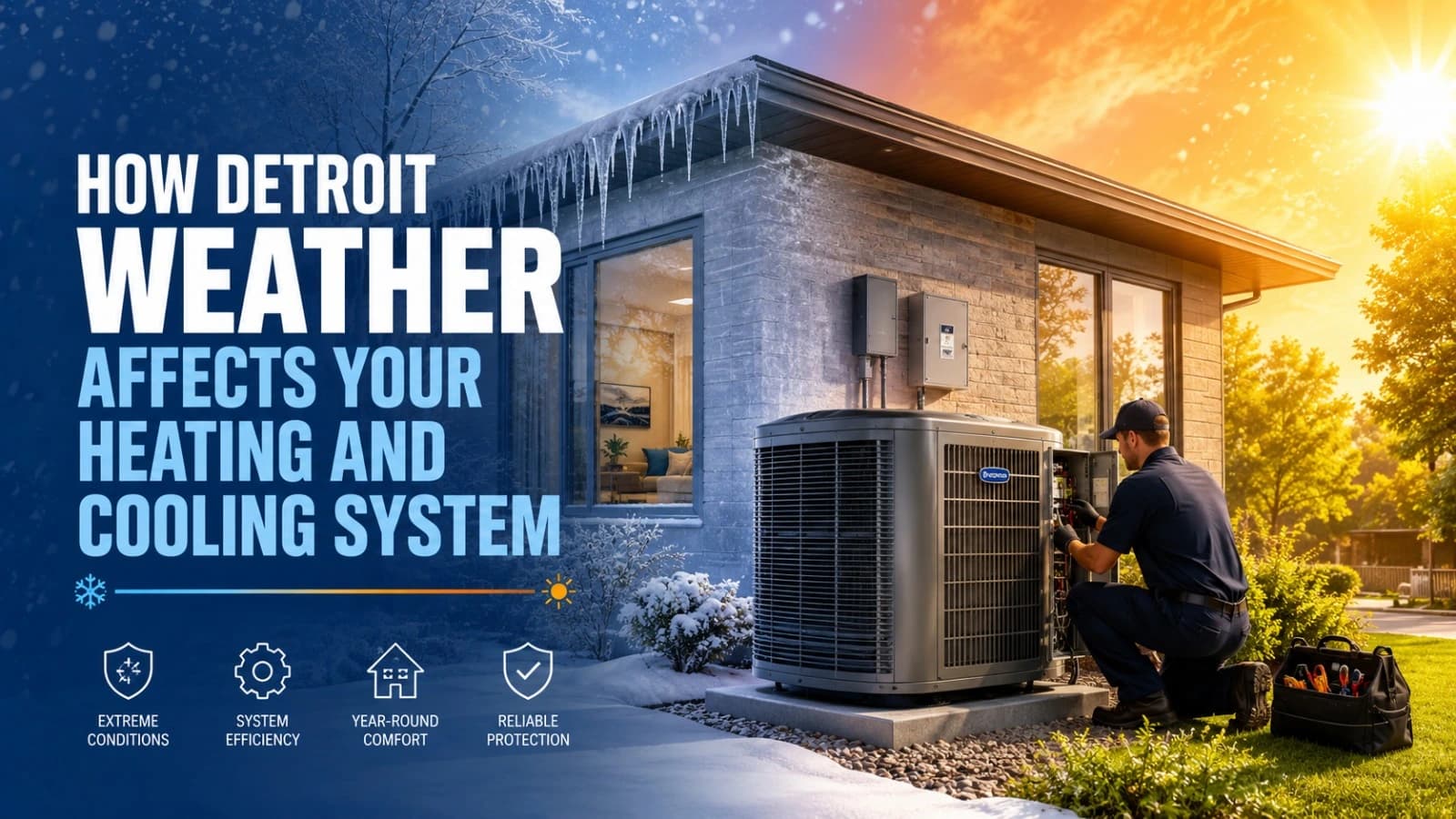
Detroit experiences some of the most challenging weather conditions in the Midwest. From freezing winters and heavy snowfall to humid summers and sudden temperature swings, local weather can put significant stress on your heating and cooling system.
Detroit weather directly affects HVAC efficiency, energy consumption, equipment lifespan, and indoor comfort. Extreme cold forces furnaces to work harder, while hot and humid summers increase the workload on air conditioners. Without proper maintenance, these seasonal demands can lead to higher utility bills, unexpected breakdowns, and costly repairs.
If you own a home or business in Detroit, understanding how local weather impacts your HVAC system can help you improve efficiency, reduce costs, and extend the life of your equipment.
Detroit weather affects heating and cooling systems because the region experiences extreme seasonal temperature variations, high humidity levels, snowfall, ice accumulation, and rapid weather changes throughout the year.
These conditions force HVACsystems to operate harder and longer than systems in milder climates.
Detroit's four-season climate creates year-round stress on heating and cooling equipment.
Direct Answer: Detroit winters place heavy demands on furnaces, boilers, heat pumps, and ventilation systems. Extended periods of below-freezing temperatures force heating equipment to run longer cycles, increasing wear and energy consumption.
| Winter Condition | HVAC Impact |
|---|---|
| Freezing temperatures | Increased heating demand |
| Snow accumulation | Blocked vents and airflow |
| Ice buildup | Reduced equipment efficiency |
| Strong winds | Heat loss through insulation gaps |
Summary: Detroit winters increase furnace workload, energy consumption, and the likelihood of mechanical wear.
Hot and humid Detroit summers force air conditioning systems to work harder to remove both heat and moisture from indoor air.
Humidity makes indoor spaces feel warmer than the actual temperature. Your AC must:
| Signs Your AC Is Struggling |
|---|
| Warm air from vents |
| High humidity indoors |
| Uneven temperatures |
| Longer cooling cycles |
| Rising electric bills |
Summary: Summer humidity increases cooling demands and can significantly reduce HVAC efficiency if systems are not properly maintained.
Detroit's rapid seasonal transitions create additional stress because HVAC systems often switch frequently between heating and cooling modes.
Frequent cycling can lead to:
These "shoulder seasons" often reveal hidden HVAC issues that may not be noticeable during peak heating or cooling periods.
The most common HVAC issues caused by Detroit weather include:
Routine maintenance is the most effective way to protect HVAC systems from Detroit's harsh weather conditions.
Dirty filters restrict airflow and reduce efficiency.
Recommended frequency: Every 1–3 months
Professional inspections should occur:
Regularly remove:
Leaky ducts can waste up to 20–30% of conditioned air.
Proper insulation reduces HVAC workload and energy consumption.
Following a seasonal maintenance schedule helps improve HVAC efficiency, reduce repair costs, and extend equipment lifespan in Detroit's challenging climate.
| Season | Maintenance Tasks |
|---|---|
| Spring | ✔ Replace filters ✔ Clean condenser coils ✔ Test thermostat ✔ Inspect refrigerant levels |
| Summer | ✔ Clear outdoor unit ✔ Monitor humidity ✔ Check airflow ✔ Clean vents |
| Fall | ✔ Furnace inspection ✔ Duct inspection ✔ Carbon monoxide testing ✔ Thermostat calibration |
| Winter | ✔ Replace filters ✔ Check vents for snow blockage ✔ Monitor furnace performance ✔ Inspect insulation |
A homeowner in Detroit's suburban area experienced rising winter utility bills and uneven heating.
Detroit homeowners face unique weather-related HVAC challenges compared to warmer climates.
Working with local HVAC professionals provides benefits such as:
If you're looking for dependable heating and cooling solutions, consider working with experienced HVAC professionals who understand the challenges of extreme climates. Desert In Alaska HVAC Services provides residential and commercial HVAC services focused on system efficiency, indoor comfort, preventive maintenance, and long-term performance. Whether you need seasonal maintenance, system upgrades, repairs, or energy-efficient HVAC solutions, working with knowledgeable professionals can help keep your home comfortable throughout Detroit's demanding weather conditions.
Most HVAC professionals recommend maintenance twice per year—once before cooling season and once before heating season.
Extreme cold can increase equipment wear, reduce heat pump efficiency, and contribute to frozen components if systems are not properly maintained.
Longer furnace runtimes, heat loss, poor insulation, dirty filters, and aging equipment can all increase winter energy costs.
Replace filters regularly, seal duct leaks, schedule professional maintenance, improve insulation, and use a programmable thermostat.
Yes. Summer humidity increases cooling demands and can make indoor spaces feel uncomfortable even when temperatures are moderate.
Most systems last 10–20 years. Frequent repairs, rising utility bills, and inconsistent comfort may indicate replacement is more cost-effective.