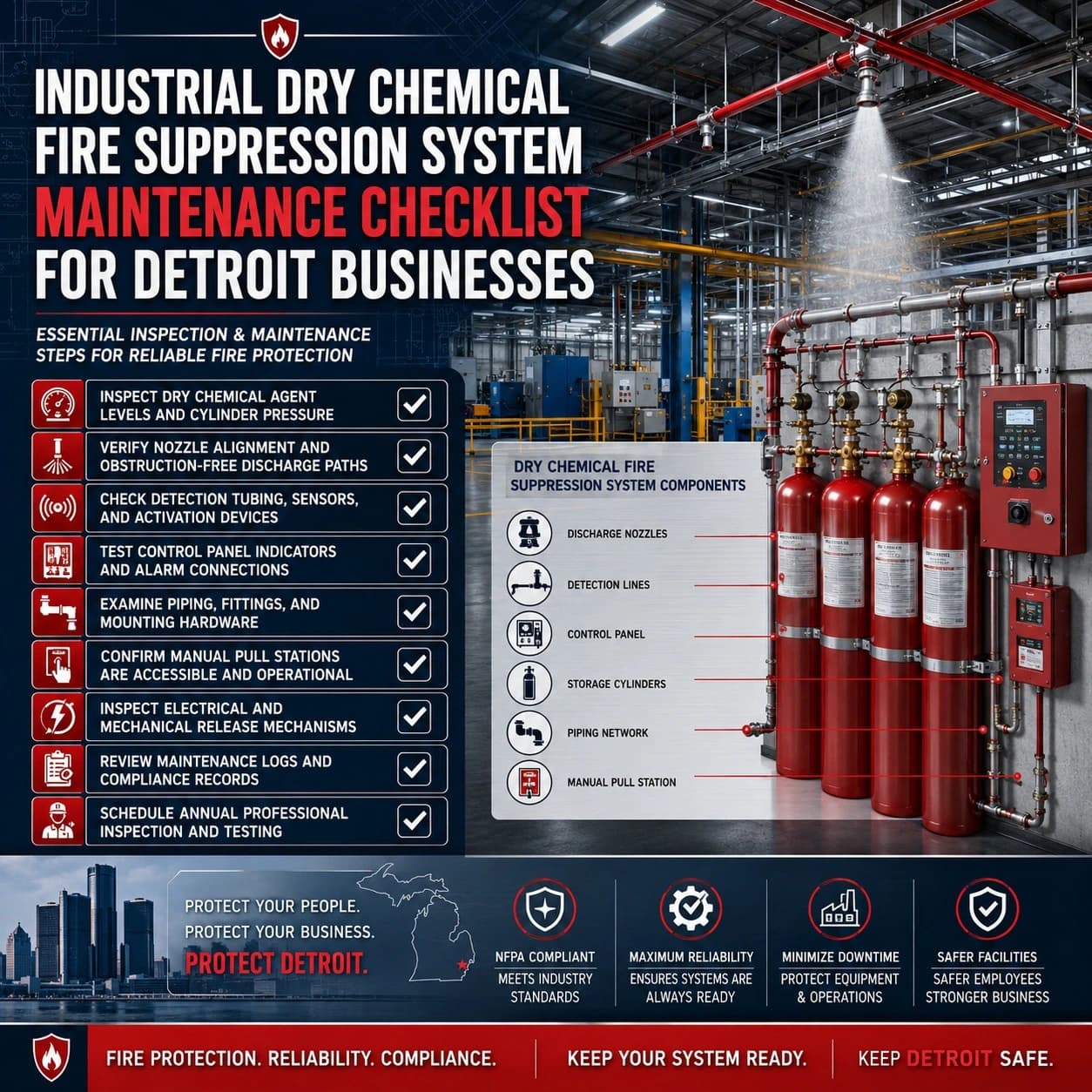
This guide provides Detroit businesses with a complete maintenance checklist for industrial dry chemical fire suppression systems. Learn daily, monthly, quarterly, semi-annual, and annual inspection tasks to keep your system reliable, compliant, and ready for emergency response.
Quick Answer
An industrial dry chemical fire suppression system is a specialized fire protection solution designed to detect and suppress fires using dry chemical agents. These systems are commonly installed in manufacturing facilities, warehouses, fuel storage areas, industrial plants, and high-risk commercial environments.
How It Works
When a fire is detected, the system automatically releases dry chemical agents to suppress the flames before they spread.
Quick Answer
Regular fire suppression maintenance ensures system reliability, workplace safety, regulatory compliance, and protection of valuable assets.
Detroit businesses face unique fire risks due to:
A poorly maintained suppression system may fail during an emergency, leading to property damage, operational downtime, injuries, and potential regulatory penalties.
Key Benefits
Daily, monthly, quarterly, semi-annual, and annual maintenance tasks work together to keep systems ready.
Checklist Overview
Visual Inspection
Housekeeping Review
System Components
Documentation Review
Functional Testing
Evaluate Facility Changes
Facility modifications can affect suppression coverage and system effectiveness.
Comprehensive Inspection
Mechanical Integrity Review
Quick Answer
Annual inspections are among the most important aspects of fire suppression maintenance and should be performed by qualified fire protection professionals.
Annual Maintenance Checklist
Agent Verification
Full System Testing
Documentation Review
Low Cylinder Pressure
Pressure loss can indicate leaks, damaged valves, or aging equipment.
Corroded Components
Industrial environments often accelerate corrosion due to moisture, chemicals, and temperature fluctuations.
Blocked Nozzles
Dust and debris accumulation can reduce suppression effectiveness.
Detector Malfunctions
Dirty or damaged detectors may delay system activation during a fire.
Quick Answer
Detroit businesses must maintain fire protection systems in accordance with applicable local fire codes, insurance requirements, and recognized fire protection standards.
Compliance typically involves:
Businesses should maintain accurate service records and ensure inspections are performed according to manufacturer recommendations and applicable fire protection standards.
Average Cost Factors
Is Maintenance Worth the Cost?
Absolutely. Preventive maintenance costs significantly less than fire damage restoration, equipment replacement, business interruption, regulatory penalties, and insurance claim complications.
Look for a provider that offers:
Questions to ask:
For businesses seeking dependable fire protection support, Desert in Alaska provides professional fire suppression and fire safety solutions designed to help organizations protect people, property, and operations.
Their team focuses on reliable inspection, maintenance, testing, and fire protection services that help businesses maintain system performance and reduce operational risks.
Learn more about their services at desertinalaska
1. What is fire suppression maintenance?
Fire suppression maintenance involves inspecting, testing, servicing, and documenting fire protection equipment to ensure reliable operation during an emergency.
2. How often should industrial fire suppression systems be inspected?
Inspection frequency depends on system type, facility hazards, manufacturer recommendations, and applicable fire safety requirements.
3. Why is fire suppression maintenance important for Detroit businesses?
Detroit's industrial and commercial facilities often contain machinery, fuels, electrical systems, and manufacturing processes that increase fire risks.
4. What does a fire suppression inspection include?
Inspections typically include evaluating cylinders, pressure levels, piping, nozzles, detectors, alarms, control panels, activation devices, and maintenance records.
5. How long does a fire suppression inspection take?
Inspection times vary depending on facility size, system complexity, and accessibility.
6. Can employees perform fire suppression maintenance?
Basic visual inspections may be performed internally, but comprehensive maintenance, testing, and repairs should be completed by qualified fire protection professionals.
7. What happens if maintenance is skipped?
Skipping maintenance increases the risk of equipment failure, property damage, injuries, downtime, and potential compliance issues.
8. How can businesses identify suppression system problems?
Warning signs include damaged components, low pressure readings, corrosion, blocked nozzles, alarm faults, and visible leaks.
9. Are maintenance records important?
Yes. Maintenance records demonstrate inspection history, support compliance efforts, and provide valuable information for audits and insurance reviews.
10. How much does fire suppression maintenance cost?
Costs vary based on system size, complexity, facility risk level, and service requirements.
11. What industries commonly use dry chemical suppression systems?
Manufacturing, automotive, warehousing, fuel storage, chemical processing, transportation, and industrial production facilities frequently use these systems.
12. What is included in annual fire suppression testing?
Annual testing often includes detector testing, alarm verification, control panel evaluation, manual activation checks, and inspection of suppression agents.
13. Can environmental conditions affect system performance?
Yes. Moisture, dust, chemicals, temperature fluctuations, and physical impacts can affect suppression equipment.
14. How does preventive maintenance improve safety?
Preventive maintenance identifies problems before emergencies occur, helping ensure systems function properly and reducing fire-related risks.
15. How do I choose the right fire suppression service provider?
Look for experience, technical expertise, industry knowledge, documentation practices, emergency support capabilities, and a strong service reputation.