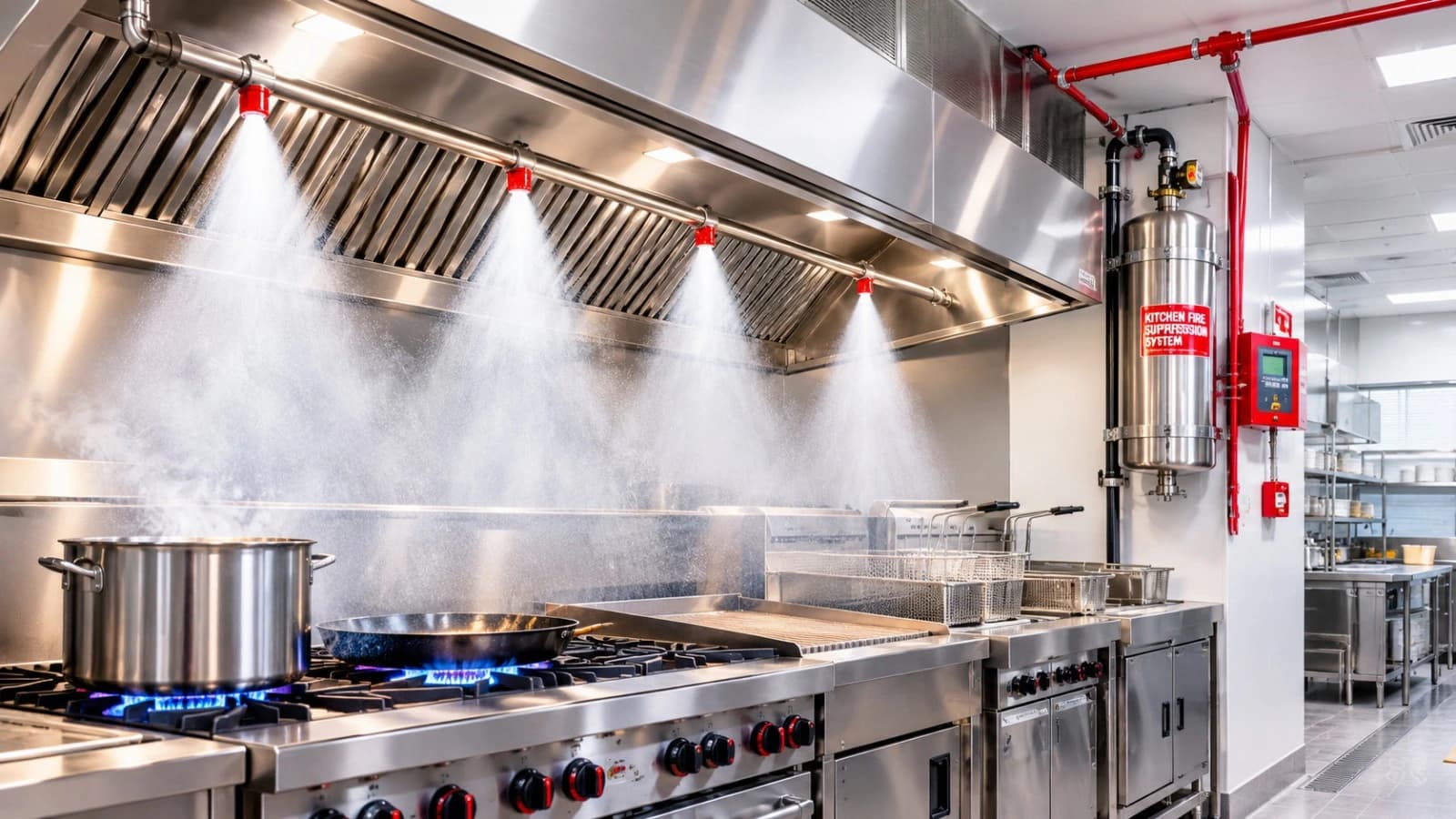
Commercial kitchen fire suppression requirements in Detroit, MI, generally include an approved hood suppression system, compliant kitchen exhaust ventilation, appropriate fire extinguishers, regular inspections, and ongoing maintenance. Restaurants must also comply with applicable Detroit fire codes and Michigan regulations. The exact requirements depend on the cooking equipment, building, system design, and applicable code provisions.
Understanding these requirements helps restaurant owners protect employees, customers, equipment, and property while maintaining fire safety compliance.
Commercial kitchen fire suppression requirements are safety rules governing how restaurants prevent, detect, and control fires involving cooking equipment, grease, and ventilation systems.
NFPA 96 addresses ventilation control and fire protection for commercial cooking operations, while NFPA 17A covers wet chemical fire extinguishing systems. Detroit's adopted fire code and applicable Michigan requirements determine how these standards apply locally.
A compliant kitchen typically needs an appropriately designed suppression system protecting the cooking appliances and associated hood and duct hazards, along with suitable exhaust ventilation and required portable extinguishers.
A commercial kitchen hood fire suppression system detects a fire through its approved detection mechanism and releases an extinguishing agent through strategically positioned nozzles.
Many restaurant systems use wet chemical agents designed to control cooking-oil and grease fires. The agent helps suppress flames and cool hot cooking surfaces, reducing the risk of re-ignition.
Depending on the approved system design, activation may also shut off fuel or electrical power to protected cooking equipment and trigger alarms.
For example, if cooking oil ignites in a commercial fryer, the system can discharge directly over the fryer and other protected cooking appliances. Correct nozzle placement, compatible equipment, and reliable fuel-shutoff connections are essential for effective protection.
Restaurant owners should review these important compliance areas:
The Detroit Fire Department's Fire Prevention Section conducts life-safety inspections and witnesses acceptance testing for required fire protection systems. Requirements may differ for new construction, renovations, equipment changes, and existing installations.
Under commonly applicable NFPA 17A provisions, commercial kitchen wet chemical suppression systems should be inspected by qualified personnel at least every six months, subject to the governing edition, system listing, and applicable local requirements.
Inspection and maintenance should address:
Kitchen exhaust cleaning follows a separate schedule based on cooking volume and grease accumulation. A suppression inspection does not replace hood, duct, and exhaust-fan cleaning.
Commercial kitchen fire suppression installation costs in Detroit vary according to system size, cooking equipment, hood dimensions, piping, and installation complexity. Additional expenses may include permits, electrical or gas interlocks, system upgrades, and acceptance testing.
Common problems include:
Avoid choosing a contractor based on price alone. An incorrectly designed or maintained system can leave critical equipment unprotected and create expensive compliance problems.
Professional installation helps ensure that system coverage matches the actual cooking layout and that critical safety controls function correctly. Qualified technicians can assess the hood, cooking appliances, suppression components, and exhaust configuration before recommending installation or modifications.
For restaurant owners, the process generally involves:
Maintenance Best Practices
Detroit restaurants generally need approved fire protection for commercial cooking hazards, compliant hood and exhaust systems, suitable portable extinguishers, required inspections, and applicable fire permits. NFPA 96 and NFPA 17A are important standards, but the controlling requirements depend on Detroit's adopted codes and applicable Michigan regulations. Confirm project-specific requirements with the Detroit Fire Department before installation or renovation.
Commercial kitchen wet chemical suppression systems generally require professional inspection every six months under commonly applicable NFPA 17A provisions. Additional service may be necessary after system discharge, repairs, or equipment changes. Hood and duct cleaning have separate schedules based on cooking operations and grease buildup. Always verify the applicable standard, manufacturer instructions, and local requirements for your installation.
Commercial kitchens using cooking oils and fats commonly require a Class K portable extinguisher in addition to any other extinguishers required for the facility. It should be accessible and maintained according to applicable requirements. Staff should know when and how to use it safely. A portable extinguisher supplements, rather than replaces, a required automatic kitchen suppression system.
There is no single installation price for every Detroit restaurant. Costs depend on the hood size, number and type of cooking appliances, suppression system design, piping, controls, required upgrades, permits, and testing. Existing systems may need modifications if equipment has changed. Request a site assessment and itemized quote to understand the project's actual scope and cost.
Requirements depend on the cooking processes, appliances, applicable codes, and building conditions. Commercial operations involving equipment that produces grease-laden vapors typically require a compliant Type I hood and associated fire protection. Not every food-service operation has identical requirements. Have a qualified professional evaluate the equipment and confirm the applicable requirements with the local authority.
An inspection may identify deficiencies involving system coverage, damaged components, failed shutdown controls, overdue maintenance, or missing documentation. Depending on the findings, the restaurant may need corrective work, additional testing, or follow-up inspections. Serious fire hazards can lead to enforcement action and potentially affect operations. Address deficiencies promptly and retain documentation showing that corrective work has been completed.
Desert In Alaska Corp provides commercial fire suppression, kitchen exhaust and ventilation, installation, inspection, testing, maintenance, and repair services for commercial properties in Detroit and Metro Detroit. The company reports serving the area since 1997 and identifies restaurants and other commercial facilities among its customers.
Whether you're opening a restaurant, upgrading a kitchen hood, or addressing inspection deficiencies, a site assessment can help identify the work needed to support safe, code-conscious operations. The company also provides related mechanical and commercial gas piping services, helping businesses coordinate important kitchen infrastructure needs.
For commercial kitchen fire suppression requirements in Detroit, MI, contact Desert In Alaska to discuss your equipment, installation needs, and maintenance schedule. Call 313-931-3070 or visit Desert In Alaska's website to request a consultation or quote.
Meeting commercial kitchen fire suppression requirements in Detroit means more than installing a hood system. Restaurants must consider approved suppression equipment, exhaust ventilation, portable extinguishers, inspections, maintenance, and applicable local permits.
Working with a qualified fire protection professional helps identify deficiencies, maintain reliable system performance, and prepare for inspections. Review your current installation and confirm requirements with the Detroit Fire Department before making changes.